
Catholic Education Flanders
Catholic Education Flanders is an umbrella organisation that supports and guides schools in various aspects of educational development. The organisation does sees internationalisation as an important tool for fostering professionalism and innovation in education. By gaining international experiences, both teachers and students acquire valuable competencies that help them better position themselves in today’s society. This means that internationalisation is not as a goal in itself but an integral process that contributes to the development of teachers and students.
Role of Catholic Education Flanders in internationalization of schools
Catholic Education Flanders supports schools in facilitating participation in international projects and partnerships and in implementing internationalization in the daily operations of the school. Each year, approximately 400 employees of our consortium partners within one of our ERASMUS+ accreditations (Catholic Education Flanders is accredited within the ERASMUS+ program for SCH, VET and AE) take part in a trajectory in which they gain international experience, after which they are guided to integrate the acquired knowledge and skills into their school operations. Additionally, the organisation provides support in drafting project applications.
Challenges in internationalisation
One of the biggest obstacles in global engagement is ensuring inclusion and diversity. Access to cross-border experiences must be available to all students. Feedback shows that such opportunities often contribute to personal growth and overcoming hurdles. Catholic Education Flanders is therefore committed to making these initiatives widely accessible.
Furthermore, embedding global engagement structurally into the curriculum is necessary. This requires a strategic approach in which cross-border learning is not dependent on temporary projects but becomes a permanent element of school operations. Adaptability in the curriculum is necessary to take advantage of international learning opportunities. Moreover, mutual exchange is crucial: global engagement should not be limited to sending students abroad but must be supported by policies, teachers, and the broader network of the school. This ensures that internationalization becomes a lasting part of the school culture.
Internationalisation in VET Education: more than internships
Catholic Education Flanders has received accreditation within the Erasmus+ program for Vocational Education and Training (VET). Within its network, 14 VET schools actively participate in internationalization initiatives. Catholic Education Flanders is also a member of vzw Connectief, where they annually support around one hundred VET students in foreign internships.
While foreign internships offer valuable learning experiences by immersing students in diverse cultures and work environments, Catholic Education Flanders advocates for a more comprehensive approach to internationalization in VET education. As mentioned earlier, the organization seeks to embed internationalization into the school’s overall pedagogical framework, ensuring it becomes an integral and lasting component rather than a series of isolated initiatives.
Catholic Education Flanders supports schools with a structured guidance trajectory for internationalization. This begins with an intake phase, in which the Temple Model of Workitects[1] is applied.
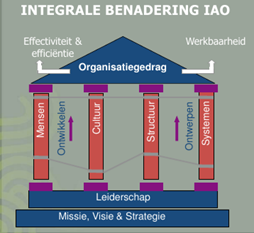
The Temple Model provides a structured framework that is used to assess to what extent a school is ready for internationalisation and where adjustments are necessary. During this phase, it is examined whether the school management supports internationalisation, whether it aligns with the school’s pedagogical vision, whether administrative processes are suitable for international projects and whether there are opportunities to disseminate acquired knowledge within and outside the school.
Additionally, Catholic Education Flanders offers an online platform where teachers are guided in their first steps toward internationalisation. This lowers the threshold for schools and enables them to implement internationalisation in a thoughtful and effective manner.
Conclusion
Internationalisation in VET should not be an isolated experience but an integral part of vocational education. It enhances professional skills, broadens perspectives and strengthens collaboration between schools and the labour market. To make this sustainable, schools must embed internationalization structurally, ensuring it benefits all students, not just a select few. By fostering strong partnerships and aligning policies with real-world industry needs, VET education can remain relevant and future-proof in an increasingly globalized economy.

Tim Van Aken
Pedagogical advisor at Catholic Education Flanders